Sunday, 26 August 2012

Auvergne summer


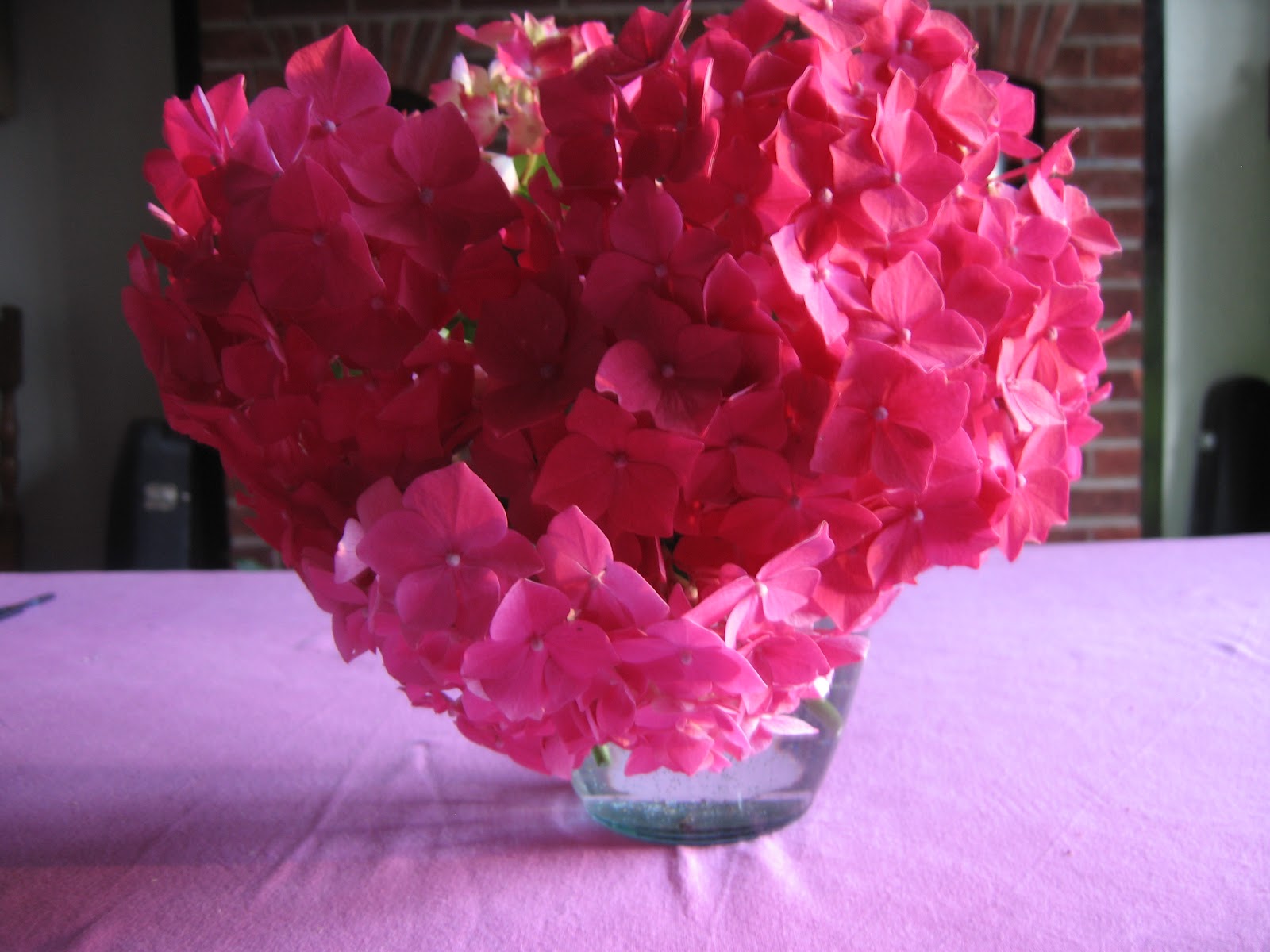
Summer came to the Auvergne in August and it was very, very hot, up into the 30's Centigrade. We drove down on a hot, sunny day and it got hotter and hotter. No one moved much, as moving seemed not worth the effort. People sat under trees for shade and to try and catch any little breeze that was available. The late evenings were full of people in the village sitting outside their houses, chatting with friends and families in the cooler darkness. The weather was perfect for the kermesse held in mid-August, with a church service for St Ferreol, followed by a sale of home made patisserie, and a fete with a lottery(3 tickets for 10euros), in which I won a voucher for 20euros worth of flowers,(winnings shown above) then a meal for everyone, with bread and patisserie made by members of the local hunt ( la Chasse) who used a bread oven belonging to people who have a house overlooking the village.
A couple of weekends later , the village held its final Marche du pays, an evening event when local vendors of sausages, aligot (an Auvergnat speciality, recipe here) omelettes, bourriols ( a type of local pancake made with buckwheat flour) and local Auvergne wines and soft drinks. Everyone buys a bit of what they fancy and sits down at long tables and benches in front of the Mairie and eats and chats, generally socialising with friends and relatives. There are usually a small group of musicians playing local music on the bagpipes and accordian, to add to the gaiety.


Our latest outing was a coach trip to the national Museum of the Resistance, followed by lunch on a boat which started  and ended its trip on the Truyere river just beneath the Viaduc de Garabit. Lunch was a four course meal, with a starter of salad, pate de foie gras, then duck leg and vegetables, followed by cheese and either apple tart or ice cream, and finally coffee. A long day which began with the coach party leaving at 6.30am, before sunrise, which we watched as the coach made its way to Mont Mouchet, with a short pause for a coffee just as we went on to the A75. The site is interesting, with a monument, walks in the surrounding forests, and a well-laid out and informative small museum.

The visit to the Garabit Viaduct, built by Eiffel,was interesting, as at  the end of the trip, the boat went almost right underneath it, perfect for taking photographs. We finished our day out with an hour's stop in St Flour, in the old town, and paid a brief visit to the cathedral, before having a quick coffee on our way back to the coach. A grand if somewhat tiring day out.

Saturday, 25 August 2012

Summer reads

I recently re-read Jane Gardam's Old Filth for a book club meeting, swiftly followed by The Man in the Wooden Hat. I first read Old Filth about 4 years ago and thought it a wonderful read. I enjoyed The Man in the Wooden Hat just as much, as it did give further enlightenment about the central relationships in Old Filth. Discussing Old Filth without revealing what happens in the next book was a bit complicated, as many of the others in the group had not read it, although one or two had, and I don't like to give away the plot when talking to people who haven't read a book under discussion, unless perhaps they have no intention of reading it.
I have a certain sympathy with Edward Feathers, sent home to England from his Malayan childhood, even though that childhood was very deprived, as I too was sent to a boarding school in England, while my parents were working in West Africa. But Old Filth, as he is usually referred to, had no mother and was ignored by his shell-shocked father ; the aunts to whom he was ostensibly sent merely passed him on to a couple who were cruel and uncaring of the children in their home. Old Filth's first school seemed to be the saving of him, as the headmaster cared deeply for the boys in his charge. Edward makes friends with another boy, Pat Ingoldby and becomes almost adopted into his family, spending many holidays with them, until the outbreak of the Second World War. His experiences during this event varied from the horrendous to the faintly ridiculous and obviously marked him for life and affected his relationship with his wife.
Although I had read Old Filth a few years ago, I seemed to have forgotten some of the details of the story, so was glad to re-read it - as a general rule, I don't do a lot of re-reading, even though it can bring out much more of a book than a first or second read can.
Another re-read was Anna Sewell's Black Beauty, last read, I think, was as a youngish child. Again, I obviously recalled some of the main characters, both human and horse, and several incidents, but I had forgotten quite how didactic in tone this story is, both about human behaviour to animals and also to each other. It is still a perfectly readable account of a horse's life and is still a suitable read for a child.

Monday, 13 August 2012

Ann Tyler

Ann Tyler's Ladder of Years was a recent Book Club read.. Billed on the cover of my edition (bought new) was "her best book yet", Since this title was published in1996 and she has written several more books, all well -received by critics, this comment is merely publishers hype. It was a good read, though, and a good introduction to Ann Tyler for me, as I've yet to read more of her work. The story is centred on Delia, youngest of thee daughters of a Baltimore doctor. She starts a relationship with Adrian Bly-Brice, despite having been married to her father's successor for many years, and later, while on the annual family holiday at the seaside, Delia starts walking along the beach and just carries on, leaving children and husband behind. After being given a lift by a young man in a borrowed vehicle, Delia ends up in a small town, where she finds herself  a room and a job, and begins to do things she has never done alone before, such as eating a proper meal in a proper restaurant.
Delia is having difficulty with her children, who are growing up and leaving home, a stage of life which she had never actually gone through, as her husband took over the family home as well as the doctor's practise, and her father remained in the house until his fairly recent death, as has one of her sisters. Delia's emotional difficulties were a rich source of our discussion of this book, and caused many to think about exactly how independent we were as modern women. I look forward to reading many other titles by Ann Tyler.

Thursday, 19 July 2012

Holiday reading

I've recently read a number of pleasant books, not regarded (yet) as great literature, but good reading all the same. The first of these was Rosie Thomas' The Kashmir Shawl, a story set in two different times and different generations of women on whom Kashmir has an effect. Mair, while clearing out her mother's home after her death, finds a package containing a beautiful shawl , a photograph and a lock of dark hair. This eventually leads her to travel to Kashmir, the origin of the shawl, and where her grandmother Nerys and her husband led remarkable lives as missionaries during the late 1930's and the war years.  The somewhat stultifying and socially rigid lives of the last of British raj are well described, as is the beauty of Kashmir itself. Mountainous parts of the world figure as the background to peoples lives, with Mair and her grandmother growing up in north Wales, spending an important part of their lives in Kashmir, and for Mair finding herself in the Bernese Oberland at the end. I've read several of Rosie Thomas's novels  and have always enjoyed her writing.
Another writer whose stories are consistently enjoyable is Libby Purves, and whose broadcasting and journalism I also enjoy. Her novel Love Songs and lies, picked up in the library, was up to standard. The story of Sally and her housemates in Oxford in the 1970's, and how Sally, a vicar's daughter, falls for the only male housemate, graduate student Max Bellinger. The ramifications of Sally's relationship with Max and the rest of his somewhat difficult family are the basis of the story, which follows Sally and her housemates from Oxford into various careers, motherhood, and marriages. The story is told by Sally looking back from middle age to her younger days, which  has the effect of distancing everything, including Sally's own emotions, and possibly making for a gentler read, despite some of the shock in the story.
I had enjoyed Natasha Solomons first novel, Mr Rosenblum's List, so looked forward to reading her second, The Novel in the Viola. Elise Landau, daughter of artistic Austrian Jewish parents, but with no special gifts of her own, is sent to England in 1938, as a housemaid, in order to escape the coming threat of war. She is sent to Tyneford, an Elizabethan manor house near the Dorset coast. Elise eventually settles into the life of a housemaid, until the son of the house, Kit, returns from Cambridge and is obviously attracted to her, despite being regarded as an obvious 'catch' by the young ladies of the neighbourhood. War eventually intervenes, to the detriment of Kit and Elise's relationship, as well as to Tyneford itself. This novel is again written from the point of view of looking back over life long afterwards. The descriptions of the beauty of the house and surrounding countryside and coast are delicious and make you feel the warmth of the summer sun, the breeze and salt air of the beach, as well as the varying interiors of Tyneford House itself.
Jean Auel's The Land of Painted Caves is a long read and continues the story of Ayla, the prehistoric women first met as a girl in The Clan of the Cave Bear. I enjoyed reading the series, which has taken the author a long time to produce, although did find some parts of this last book a little repetitive in places. I started reading the series when they were first published, in the 1980's, and although haven't reread any, can still remember enough to be able to make sense of the last book. Jean Auel does give lots of background as reminders, so catching up with books read decades earlier is not too hard.

Thursday, 5 July 2012


Back in the Auvergne, last week we went out for lunch to this restaurant, along with a group of people from the local  commune of Le Vaulmier. Lunch was fairly simple, but good and not expensive. The view from the balcony of the restaurant was superb, as was the weather.  It made a lovely change after a week or so of working on the house, cycling (my husband) or swimming (me, usually or occasionally both of us) and shopping in Mauriac, our nearest town.
We also took a trip to Aurillac, the main town in the Cantal departement., to a vide-grenier ( a bit like a car-boot sale). Unfortunately the weather was cool, wet and very cloudy and the vide-grenier disappointing, with few stalls and not much on those that were there. We found somewhere for lunch, then decided to drive home via the Cere valley, which has several picturesque villages and is a touristy place in summer. We stopped at Le Lioran to have a look around, as it is a ski resort in winter, with several lifts up to the mountains, and also a great mountain biking area in summer, with some of the lifts adapted to hold bikes. There is also an historic water tower, a reminder of the days of steam trains, at the station. Here is a picture of it. We were glad to reach home after a terrifying drive up to the Pas de Payrol, as it was covered in cloud, making visibility almost down to a car length in front of us.

Saturday, 23 June 2012

Recent reading


I seem to have read quite a few books recently, but not commented on them. One read was Cannery Row, by John Steinbeck. Set in California, cannery row was a real place based on sardine fisheries and canning factories. However, the characters in the novel are fictional, although probably a mix of people that Steinbeck had known. Doc, the owner of a small laboratory supplying sea creatures to other laboratories and academic departments for study, is one of the few people with a regular job. Another is Lee Chong, owner of a store selling almost anything and everything. Other characters are Mack and the boys, a group of vagrant types who work from time to time in the canning factories and who take over an old store of Lee's and turn it into a home from themselves. Ther are some wonderful set pieces of comedy in the story, such as the party which mac and the boys plan for Doc when he returns from a gathering trip, but Doc is late and the party happens without him. Another wonderful event is a frog-gathering expedition by Mack and the boys; the frog collecting is successful, but the money it was intended to raise is less easy to keep a hold on.
The effect of the novel is partly comedic, but as the period in which it is set is the Depression of the Twenties and Thirties, partly heroic in the way in which people get on with their lives.

Emily Bronte's only novel, Wuthering Heights is a totally different type of book to Cannery Row. Set in Yorkshir, with vivid descriptions of the wild landscapes and winter weather, as well as the houses inhabited by the characters, the story is based on the lives of Catherine Earnshaw and Heathcliff, the foundling child brought home by Catherine's father and adopted into the family. Cathy and Heathcliff eventually form an amazing passion for each other, which is never requited. Catherine marries Edgar Linton, the son of a neighbouring landowner, while Heathcliff disappears for a time, returning to Wuthering Heights with all the appearance of a gentleman. Heathcliff's distress at Cathy's marriage leads him to revenge on his former adopted family, with severe consequences for Cathy and her brother Hindley.  The story is told by two narrators, Lockwood, who rents neighbouring Thrushcross Grange from Heathcliff, and Ellen (Nelly) Dean, a servant who has worked for both the Earnshaw and Linton families.  This was a re-read for me, as i first read and studied it many years . This time it seemed more of the entertainment as which it was initially published. The power of this story lie in the depictions of the characters and their emotions.

Another very different read, Rosy Thornton's The Tapestry of Love is set in the modern day Cevennes, a wild, very rural and beautiful part of the Massif Central, bordering the Languedoc region. The heroine, (another Catherine) a divorcee with grown-up children, decides to leave England and settle in France, and start a business as a seamstress and upholsterer.  Her nearest neighbour, a rather enigmatic Frenchman is the main love interest, but there are several trials and tribulations that Catherine undergoes before he declares his feelings and she hers. The wild and beautiful landscape is clearly described, as is the sudden changeability of the mountain weather. Catherine's family, her children and sister all visit her in her rural hideaway, with varying impact on her new life. A worthwhile read.

The Other Family by Joanna Trollope is one that escaped my attention until I chanced on it in my local library. The story of Chrissie and her three daughters, Tamsin, Dilly and Amy. Her partner, Richie, a singer and musician dies suddenly, and Chrissie and her daughters find that their once secure life falls apart. Richie had had another family, a wife whom he never divorced and a son, now grown up, both still living in Newcastle, Richie's home town. All are affected by Richie's death in a variety of ways, and it is how Joanna Trollope interweaves the stories of Richie's two families and how they come to interact with each other that makes for an intriguing read.

Friday, 18 May 2012

Back home from France, and we seem to have brought some sun with us for a while. Last Saturday and Sunday were both sunny enough to get out and do a bit of much-needed tidying up in the garden. And back home to a heap of post, with lots of interesting journals to read, such as newbooks magazine, and the Persephone Biannually, from Persephone Books. And an email from a book Club member, with a new list of titles for the next few months. So I'd better get reading.

google tracker